

WeLearn 2.0 is most commonly searched as a digital learning or employee training platform, but the name can create confusion because “WeLearn” is used by different organizations, platforms, and learning services.
For many users, the term points to an online training system connected with workplace learning, course completion, skill development, and employee onboarding. In the Wendy’s context, public information from Cornerstone says Wendy’s built its WeLearn eLearning platform for restaurants on Cornerstone Learning and used it to deliver training to a large employee and franchise network.
There are also other platforms and apps using the WeLearn name. For example, the WeLearn mobile app on Google Play describes itself as a micro-learning app with short learning capsules, quizzes, videos, and offline mobile access. Apple’s App Store listing describes similar mobile learning features, including short lessons and game-based training elements.
Because of this, the first thing users should understand is simple: WeLearn 2.0 is not always one single public platform for everyone. Its meaning depends on the organization, employer, school, or training provider connected to the login page.
Why People Search for WeLearn 2.0
Most people searching for welearn 2.0 are not looking for a long technical explanation. They usually want one of four things:
- They need to log in to a training portal.
- They want to understand what the platform is used for.
- They are trying to complete courses or workplace training.
- They are confused because the name appears on different websites.
That confusion is understandable. Some learning systems are private portals. They may not work like a normal public website where anyone can create an account. Access is often controlled by an employer, school, franchise group, or training administrator.
In some cases, “WeLearn 2.0” may refer to an internal employee learning environment. In others, it may be used as a broader name for a learning management system, a mobile learning app, or a branded training experience.
How WeLearn 2.0 Usually Works
A platform like WeLearn 2.0 usually works as a digital learning hub. Instead of relying only on printed manuals, classroom sessions, or scattered training files, users can access lessons and track progress from one place.
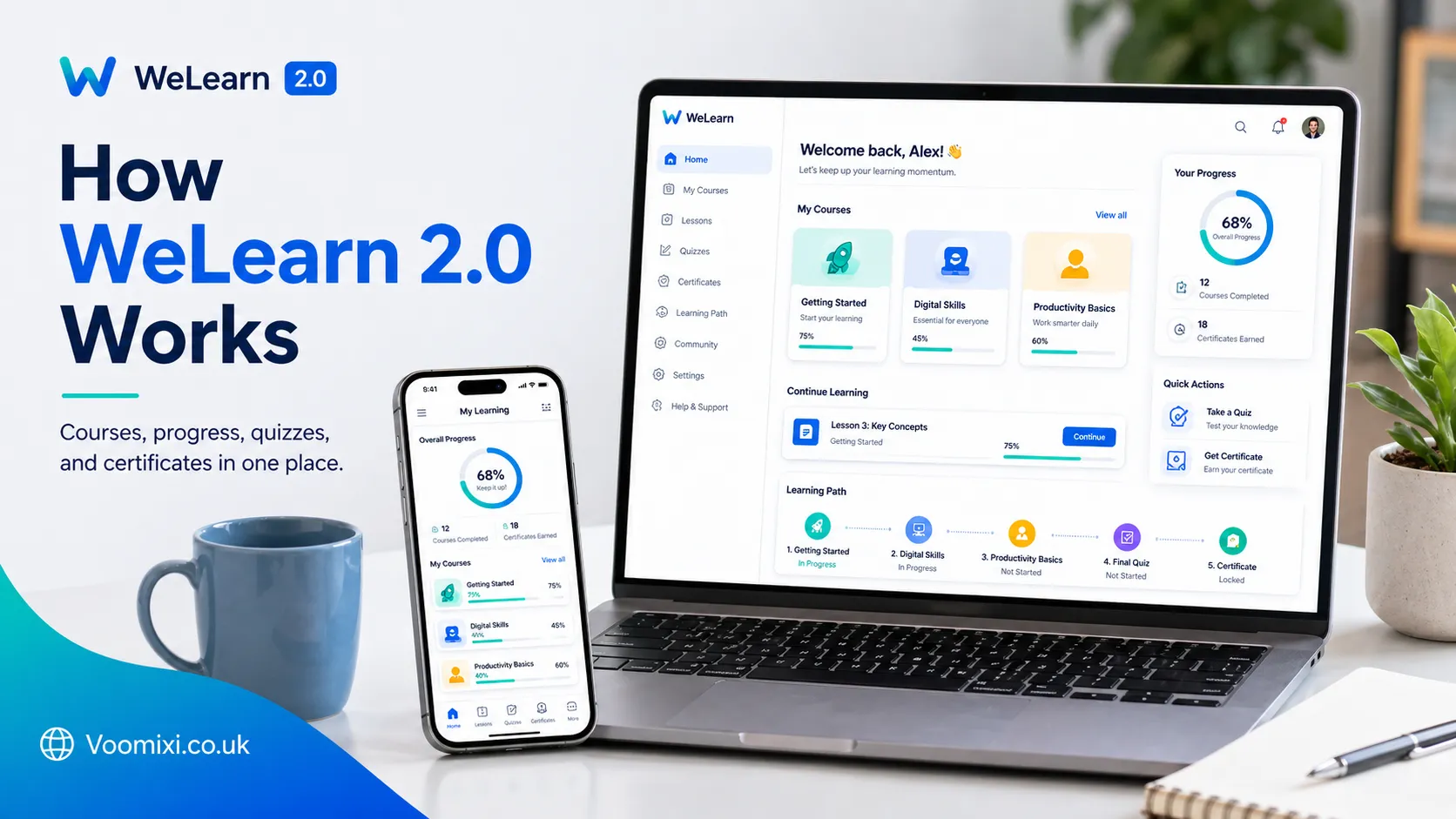
A typical learning platform may include:
- Online courses
- Training videos
- Short lessons
- Quizzes and assessments
- Progress tracking
- Certifications
- Manager dashboards
- Mobile access
- Learning reminders
- Completion records
In Wendy’s case, Cornerstone’s case study says the company moved from largely paper-based training tools, including job aids and DVDs, to a digital learning approach using Cornerstone Learning. The same source says Wendy’s delivered training through WeLearn to more than 250,000 employees across franchise organizations.
This shows the practical purpose of a system like WeLearn: it helps organizations deliver consistent training at scale.
Key Features Users May Expect
The exact features depend on the version and organization using the platform. Still, most WeLearn-style systems follow the same basic pattern.
1. Course Library
Users may see a list of assigned courses after logging in. These can include onboarding lessons, safety training, role-based modules, service standards, product knowledge, or leadership development.
For employees, assigned courses usually depend on job role, location, or manager requirements. A new team member may see beginner training, while a manager may see leadership or compliance modules.
2. Progress Tracking
A major benefit of digital learning platforms is tracking. Users can often see which lessons are complete, which ones are pending, and whether any assessments need attention.
For managers and administrators, tracking helps confirm who has completed required training. This is especially useful in businesses where safety, operations, or service quality matters.
3. Assessments and Quizzes
Many learning systems include quizzes after lessons. These checks are not always designed to be difficult. Their purpose is to confirm that the learner understood key points before moving forward.
A quiz may cover simple workplace procedures, customer service steps, safety rules, or product details.
4. Certificates or Completion Records
Some training systems issue completion records or certifications. In workplace settings, this can help prove that an employee has finished required training.
Cornerstone’s Wendy’s case study states that Wendy’s offered multiple certifications through WeLearn and linked learning data with performance insights.
5. Mobile Learning
Modern learners often need access outside a fixed desktop setup. Some WeLearn-related apps focus on mobile-first learning. The WeLearn app listings mention short training capsules, multimedia content, quizzes, and offline access for mobile users.
This type of design helps people learn in short sessions instead of sitting through long blocks of training.
WeLearn 2.0 and Workplace Training
For workplace users, WeLearn 2.0 is usually about practical training, not casual education. The goal is to help employees understand their tasks, follow procedures, and build confidence in their roles.
In a restaurant, retail, healthcare, logistics, or service environment, training platforms may support:
- New employee onboarding
- Food safety or workplace safety
- Customer service standards
- Product knowledge
- Role-specific procedures
- Manager development
- Refresher training
- Compliance requirements
The value is consistency. If a company has many locations, it cannot rely only on informal training. A digital platform helps deliver the same core information to everyone.
That does not mean online training replaces hands-on practice. The strongest workplace training usually combines both. A learner may watch a short lesson, pass a quiz, and then practice the task with a supervisor.
Quick Comparison: WeLearn 2.0 vs Traditional Training
| Area | Traditional Training | WeLearn 2.0-Style Learning |
|---|---|---|
| Access | Often in person or paper-based | Online or mobile access |
| Tracking | Manual records | Digital progress tracking |
| Consistency | May vary by trainer | More standardized lessons |
| Flexibility | Fixed time and place | Can be completed in smaller sessions |
| Updates | Slower to revise | Easier to update centrally |
| Learner support | Depends on trainer availability | Lessons may be available anytime |
The best approach is not always one or the other. For many organizations, digital learning works best when paired with real-world coaching.
How to Access WeLearn 2.0
Access depends on the organization connected to the platform. If WeLearn 2.0 is part of your workplace, school, or training provider, you normally need official login details.
A general access process may look like this:
- Go to the official login page provided by your employer or training administrator.
- Enter your assigned username, employee ID, email, or organization account.
- Use the password or sign-in method given to you.
- Complete any required verification step.
- Open your assigned courses or training dashboard.
Some organizations use single sign-on, which means users log in through another company account. For example, Welocalize’s WeLearn support page says users access WeLearn with Okta credentials, and it notes that course assignment may take up to 24 hours after a welcome email.
That example is useful because it shows an important point: access rules vary. A login method for one WeLearn system may not work for another.
What to Check Before Logging In
Before entering details into any WeLearn 2.0 page, users should confirm that the portal is legitimate.
Check these points:
- The link came from your employer, school, manager, or official support team.
- The domain looks correct and not misspelled.
- The page uses a secure connection.
- You are not being asked for unusual personal information.
- The login instructions match what your organization gave you.
- You know who to contact if the password does not work.
This matters because training portals often look simple. A user may search online, click the wrong result, and end up on an unrelated page.
Read must: Kashyeportazza Ltd Products: What Buyers Should Know
Common Login Issues and What They Mean
Login problems are common with private learning platforms. Most issues have simple causes.
Wrong Username or Employee ID
Some systems use email addresses. Others use employee numbers, organization IDs, or single sign-on accounts. If your login fails, confirm the correct username format before resetting anything.
Password Not Set Yet
New users may need to create a password first. Some systems ask users to click “forgot password” at first access so they can set credentials securely.
Course Not Assigned Yet
You may be able to log in but not see any courses. That does not always mean something is broken. Course assignment can take time, especially after onboarding or account creation.
Browser or Device Problems
Some training portals work better on updated browsers. If a page does not load, try clearing the browser cache, switching browsers, or using a desktop device.
Account Not Activated
If you recently joined an organization, your learning account may not be active yet. In that case, a manager, HR contact, or training administrator is usually the right person to ask.
What Users Should Not Assume
A common mistake is assuming every “WeLearn 2.0” result online leads to the same platform. That is not reliable.
Users should not assume:
- One login page works for all organizations.
- Public search results are always the correct portal.
- A course will appear immediately after account setup.
- A personal email can be used if the system requires an employee account.
- All WeLearn platforms have the same features.
- Public articles can provide private login credentials.
If the platform is connected to your job or school, the safest route is always the official link from that organization.
Practical Checklist for New Users
Use this checklist if you are trying to understand or access WeLearn 2.0 for the first time.
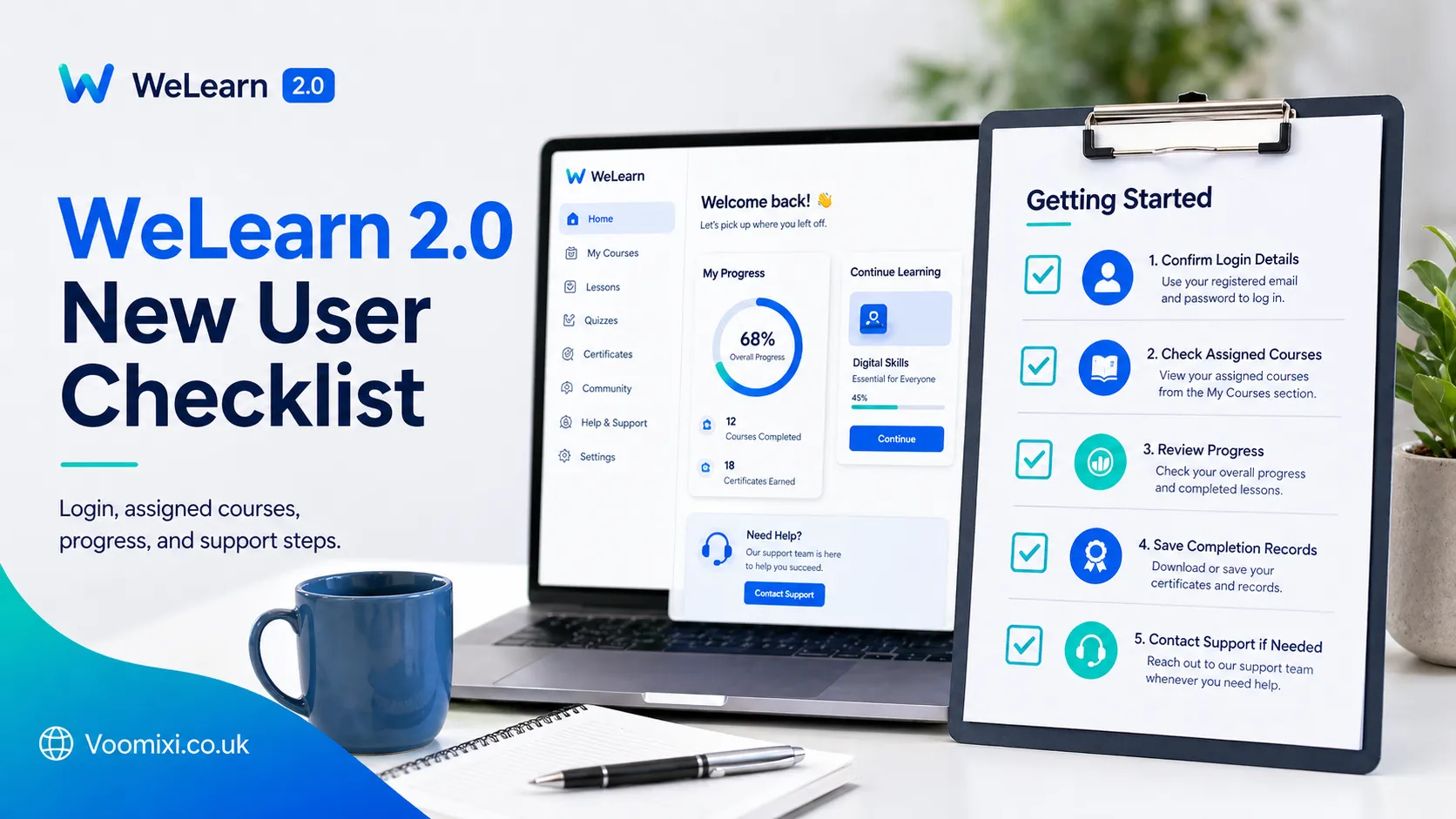
Before You Start
- Confirm which organization owns your WeLearn account.
- Ask for the official login link.
- Check whether you need an employee ID, email, or single sign-on.
- Make sure your account has been activated.
- Use a current browser or supported mobile app.
- Keep your password private.
- Contact official support if your courses do not appear.
After You Log In
- Review your assigned courses first.
- Check deadlines or required completion dates.
- Complete lessons in the suggested order.
- Take quizzes carefully.
- Save or note any completion confirmation.
- Ask a supervisor if training content does not match your role.
This simple approach can prevent most beginner problems.
Key Things That Matter Most
When looking at WeLearn 2.0, the most important point is not the name. It is the purpose behind the platform.
A good learning portal should help users:
- Understand what they need to learn
- Complete training without confusion
- Track progress clearly
- Access the right material at the right time
- Apply what they learn in real work or study settings
For organizations, the platform should make training easier to manage. For learners, it should make expectations clearer.
Common Misunderstandings About WeLearn 2.0
“Anyone Can Sign Up”
Not always. Many WeLearn portals are private. Access may be limited to employees, students, or invited learners.
“WeLearn 2.0 Is One Universal Website”
The name appears in different contexts. Some results point to workplace training, some to mobile learning, and some to organization-specific learning systems.
“Online Training Means No Hands-On Practice”
Digital lessons are often only one part of training. In many workplaces, online learning supports real-world practice rather than replacing it.
“If I Cannot See a Course, My Account Is Broken”
Not necessarily. Course assignment may depend on timing, role, location, or administrator approval.
“All Login Advice Online Applies to Me”
Login rules are controlled by the organization running the platform. Advice from another company’s system may not match yours.
When WeLearn 2.0 Is Useful
WeLearn 2.0-style platforms are most useful when learning needs to be organized, repeatable, and easy to track.
They work well for:
- New employee onboarding
- Staff training across many locations
- Safety and compliance education
- Product or service training
- Short refresher lessons
- Manager development
- Blended learning programs
- Remote or mobile learners
They are less useful when a learner needs deep one-on-one coaching, complex practical assessment, or highly customized instruction without support.
Final Verdict
WeLearn 2.0 is best understood as a digital learning and training environment, often connected to an organization’s internal education system. For some users, it may refer to workplace training. For others, it may relate to a mobile learning app, course platform, or branded learning portal.
The most important step is to identify the correct organization behind your access. Use only the official login link, follow the instructions provided by your employer or training team, and confirm your assigned courses before assuming something is wrong.
A well-run platform like WeLearn 2.0 can make training clearer, faster, and easier to track. But its real value depends on how well the lessons connect to the learner’s actual role, tasks, and goals.
FAQs About WeLearn 2.0
Is WeLearn 2.0 a public learning website?
Not always. Some WeLearn systems are private training portals used by employers, schools, or organizations. Public access depends on the specific platform.
Why can’t I log in to WeLearn 2.0?
You may be using the wrong login page, username format, or password. Your account may also be inactive, or your organization may use single sign-on.
Can I access WeLearn 2.0 on mobile?
Some WeLearn-related platforms support mobile learning. The WeLearn app listings mention mobile access, short learning capsules, quizzes, and offline use.
What should I do if my courses are missing?
Check whether your account is fully active and whether your courses have been assigned. If the issue continues, contact your manager, school, HR team, or training administrator.
Is WeLearn 2.0 only for Wendy’s employees?
No. Public search results show the WeLearn name in different contexts. Wendy’s has used WeLearn as an eLearning platform for restaurant training, but other organizations and apps also use similar naming.
